
Chambersburg Resident Lookup Records
Official records do not make one master list of Chambersburg residents. Instead, each source documents a narrow connection. The Franklin County assessment record can connect a recorded owner to a parcel. A deed identifies parties to a recorded transfer. A court docket identifies public case participants and events. Historic vital and estate material can support family-history work. Begin with the record that fits the fact already known, then use a second source to test the match.
| Record | What It Confirms | Where | Access |
|---|---|---|---|
| Assessment/property record | Recorded owner, parcel, property details, and possible tax mailing detail | Franklin County Property Records Online or the Tax Assessment counter | A mailing address is not proof of current presence at the parcel. |
| Recorded land document | Grantor, grantee, recording information, and legal description | LANDEX, the Register & Recorder, or County Archives | Index availability and document-image availability differ. |
| Court docket | Public parties, docket number, case type, status, dates, and disposition events | Pennsylvania UJS Case Search | Sealed, expunged, juvenile, limited-access, and some civil data do not display. |
| Vital and marriage material | Documented life event or historic relationship evidence | Pennsylvania Vital Records genealogy, County Archives, or Orphans’ Court | Certified records require the appropriate eligibility route. |
| Estate papers | Decedent, executor, heirs, inventory, and family-agreement evidence | Franklin County Archives and Register of Wills channels | An estate record does not establish a current address. |
For a current parcel question, use the property and deed routes first. For a named public case, start with the docket. For a historical family connection, combine archive indexes, a vital-record route, and estate material. A person may appear in none of these sources, or may appear only under an older spelling.
Court Dockets in a Chambersburg Lookup
The free statewide UJS portal is the proper online starting point for a Franklin County public docket. A careful Chambersburg search uses the participant name, selects Franklin County, and narrows the filed-date span when the name is common. The portal also supports a docket-number search once that number is known. Magisterial docket examples begin with MJ, while Common Pleas examples begin with CP. A result is a public docket sheet, not a certified court file or a complete criminal-history record.
| UJS field or control | Type | Use in a Franklin County search |
|---|---|---|
| Participant Last Name / First Name | Text | Use known name variants, then inspect party role and docket details. |
| County | Dropdown | Select Franklin to limit a statewide query. |
| Date Filed Start Date / End Date | Date pair | Enter dates in mm/dd/yyyy format when a sensible period is known. |
| Docket Number | Text | Use the exact alpha-numeric number when a prior search or court notice supplies it. |
| Participant Role and Case Status | Dropdowns | Use only after choosing the applicable search mode and court type. |
| MDJS Court Office | Dropdown | District 39-2-01 is the local magisterial office when that filter is available. |
Expected public docket-sheet inventory: case or docket number; court and county; case category, type, and status; filing and event dates; caption and participant names and roles; judge or court office; public charge or claim information; public disposition and financial-event information; and scheduled-event details. Underlying pleadings, certified dockets, and archived files follow the request procedure of the court that holds them.
Note: UJS warns that recent entries may be delayed and that legacy court material was not necessarily migrated into the public system.
Chambersburg Resident Lookup Name Checks
Same-name errors are common. Build a match around at least two stable facts instead of relying on a shared first and last name. In a property trail, compare the parcel or legal description, the recording date, and the tax mailing detail. In a court result, compare the court, docket number, filing date, case type, and party role. For a historical household, compare spouse, occupation, address, age, or a directory entry with the nearest available census.
Franklin County’s 20-character Uniform Parcel Identifier can help distinguish similarly addressed or similarly named properties when an assessment record and recorded instrument are being compared. It connects land-record workflows, but it does not identify every person who may have lived at a location.
Chambersburg Vital-Record Lookup Limits
Pennsylvania’s Division of Vital Records issues certificates for births and deaths since 1906. Current certificates are limited to eligible applicants and use state online, mail, or public-office channels. For birth records, the state lists close family, legal, and representative relationships. Death records have their own eligible-applicant rules. A $20 certificate fee is listed by the state, with an additional $10 online service charge where applicable, so confirm the live instructions before ordering.
The official Pennsylvania birth-certificate page sets out the state’s eligibility and application route.
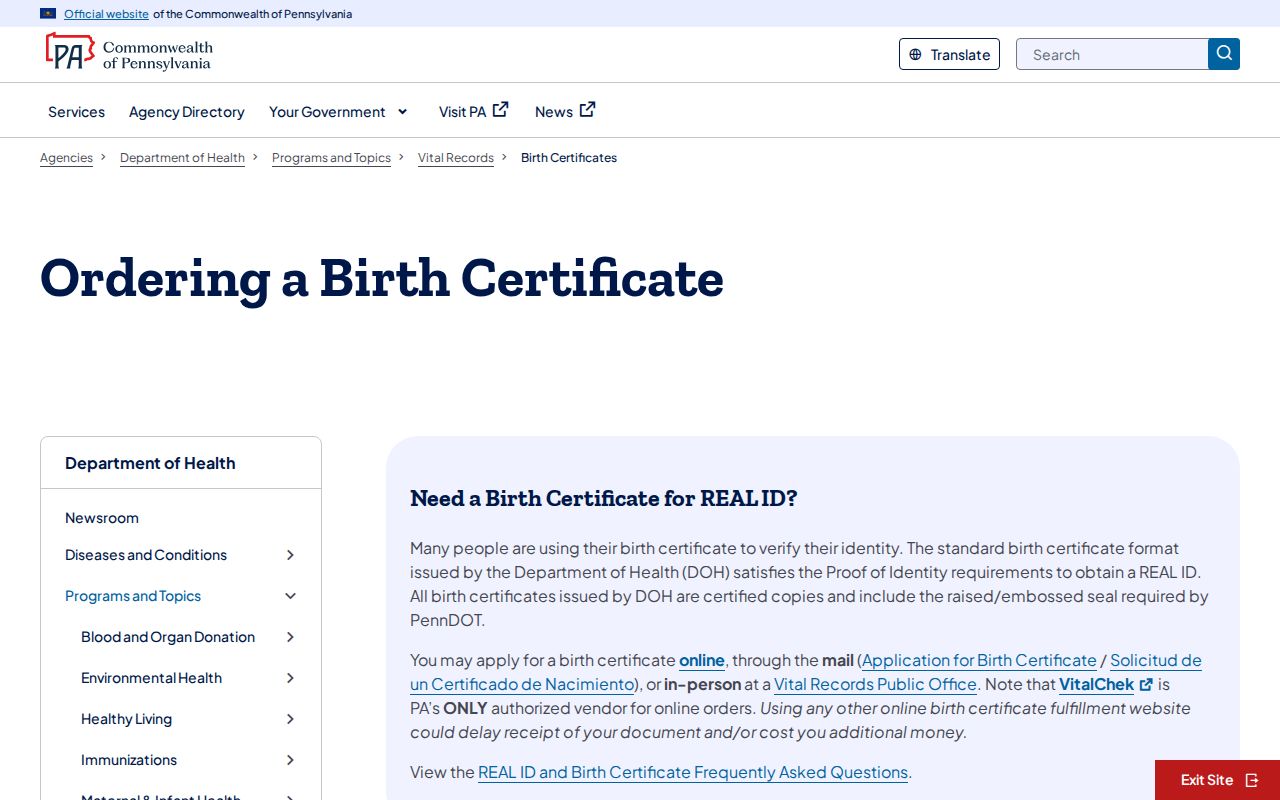
Use that state channel for a current birth certificate, rather than treating a name match in a historical index as an official copy.
Historical research follows a different route. Under 35 P.S. §450.801, birth records become public after 105 years and death records after 50 years. The State Archives lists birth indexes for 1906-1913 and death indexes for 1906-1968, while Franklin County Archives preserves earlier local registers and selected scanned material. Franklin County marriage records are held through the Clerk of Orphans’ Court and archive series by year, not through the statewide birth-and-death process.
Note: Current certificates and archival copies use different custodians, eligibility rules, fees, and documentation routes.
Voter Status in a Chambersburg Lookup
Pennsylvania’s Check My Registration Status service is an individual status channel. It is not a public directory for browsing people. Franklin County Voter Registration can also answer registration questions at 717-261-3886. A failed status search should not be treated as proof of any person’s registration, because changed names or addresses and other record conditions can affect a result.
Public voter information and street lists are governed by 25 Pa.C.S. §§1207 and 1404. The law provides a regulated inspection and request route, including identification and a written restricted-use statement for public-list information. Electronic signatures and SURE registration numbers are not public-list fields. The election office, rather than an open-ended resident lookup, is the correct channel for a lawful election-record request.
The official Pennsylvania Election Code §1404 describes the statutory boundaries on those public information lists.
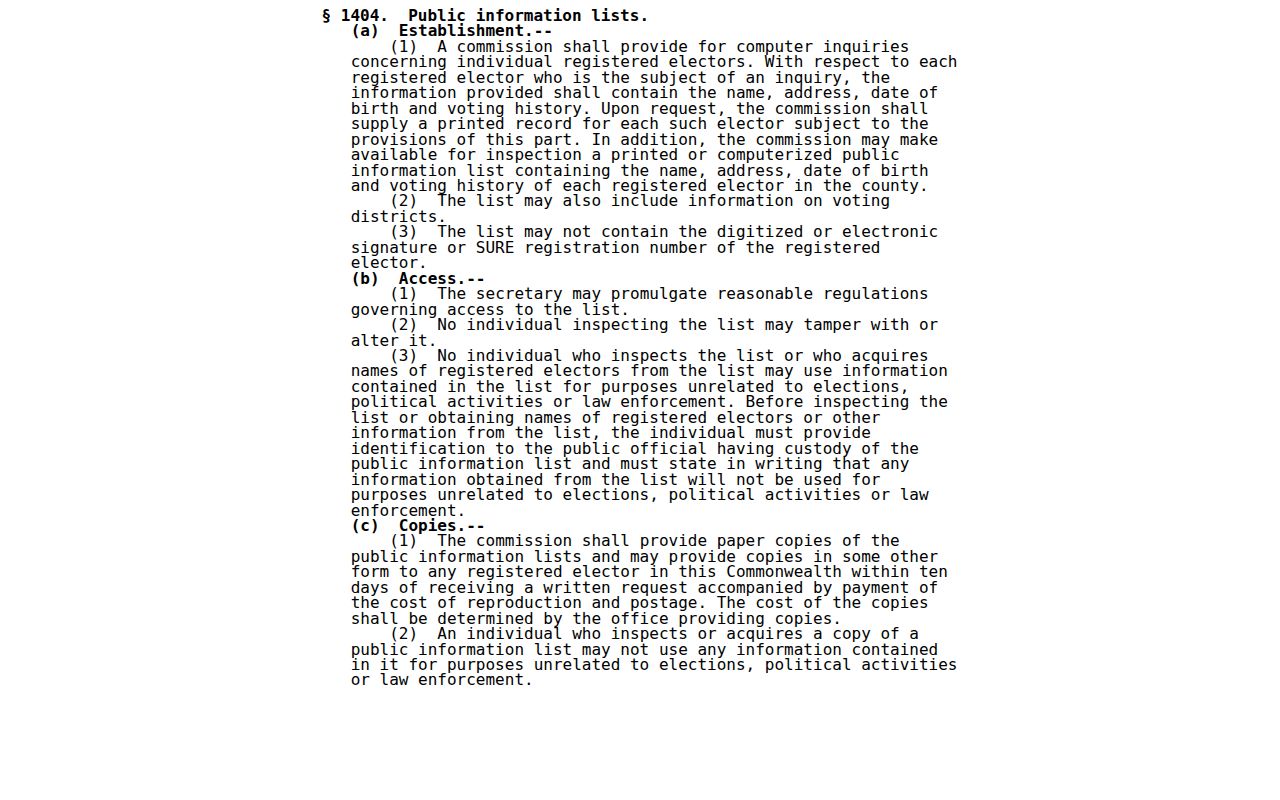
That statutory route preserves the distinction between a regulated civic record and a general-purpose people list.
Verify a Chambersburg Resident
A sound verification sequence starts with the narrowest official question. If the person is connected to a known parcel, separate the physical situs address from any tax mailing address. If there is a public court matter, search the name with Franklin County and a filed-date span, then read the docket rather than stopping at the result list. Where a vital or marriage record is needed, use the state or county route that matches the record’s date and the requester’s eligibility.
- Record the exact name, any known name variant, and the specific address, date, or family fact being checked.
- Use the Franklin County property service or Tax Assessment counter when a parcel connection is relevant, and note the parcel or UPI separately from mailing information.
- Check a recorded land document through LANDEX or the Register & Recorder when the question concerns a recorded owner or transaction.
- Run a Franklin County UJS participant search for a public case, then compare docket number, role, dates, and court office.
- Request a certified or archival record only from the custodian that holds it when documentary proof is needed.
- Docket
- A court’s running case record, including the case number, events, parties, and public status entries.
- Index versus image
- An index points to a record. An image is a view of the actual scanned document, and an index may exist when an image does not.
- Certified copy
- A custodian-issued copy carrying the certification required when an official document must be proved or filed.
Heir Trails for a Chambersburg Lookup
For family or estate research, identify the decedent through an archival death register, obituary, or State Archives index, then move to Franklin County estate material. County Archives reports indexes and papers from 1784 forward, including wills, bonds, inventories, accounts, distributions, releases, and family agreements. The current Register of Wills channel is the appropriate place for current probate matters or an official copy. These papers can identify an executor or relationship, but they do not promise a present-day location for an heir.
The Franklin County Historical Society genealogy-library page describes the Old Jail collection, including local yearbooks, newspapers, church and Bible material, cemetery indexes, maps, and family files.
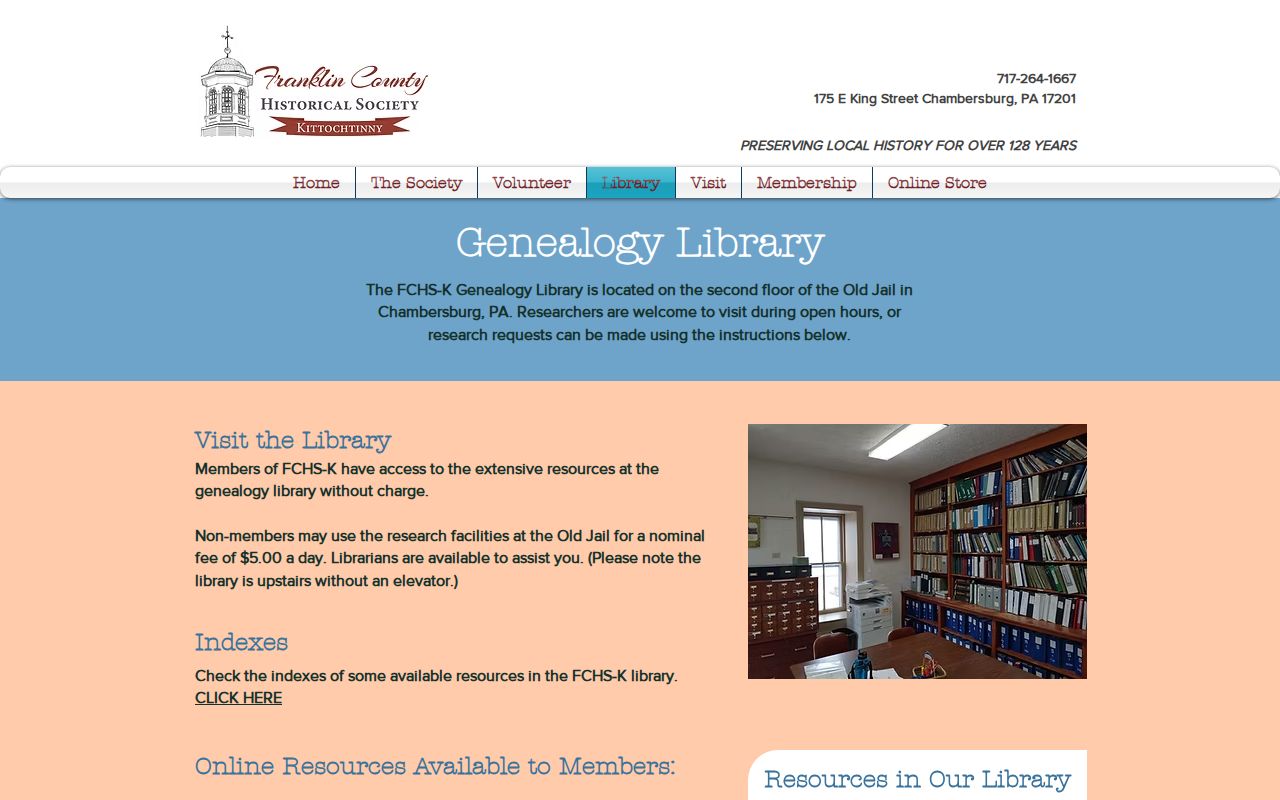
Those historical layers can corroborate a time-and-place connection after a county index supplies a lead.
For a person who cannot visit, the Historical Society research-services page explains its paid research-request channel.
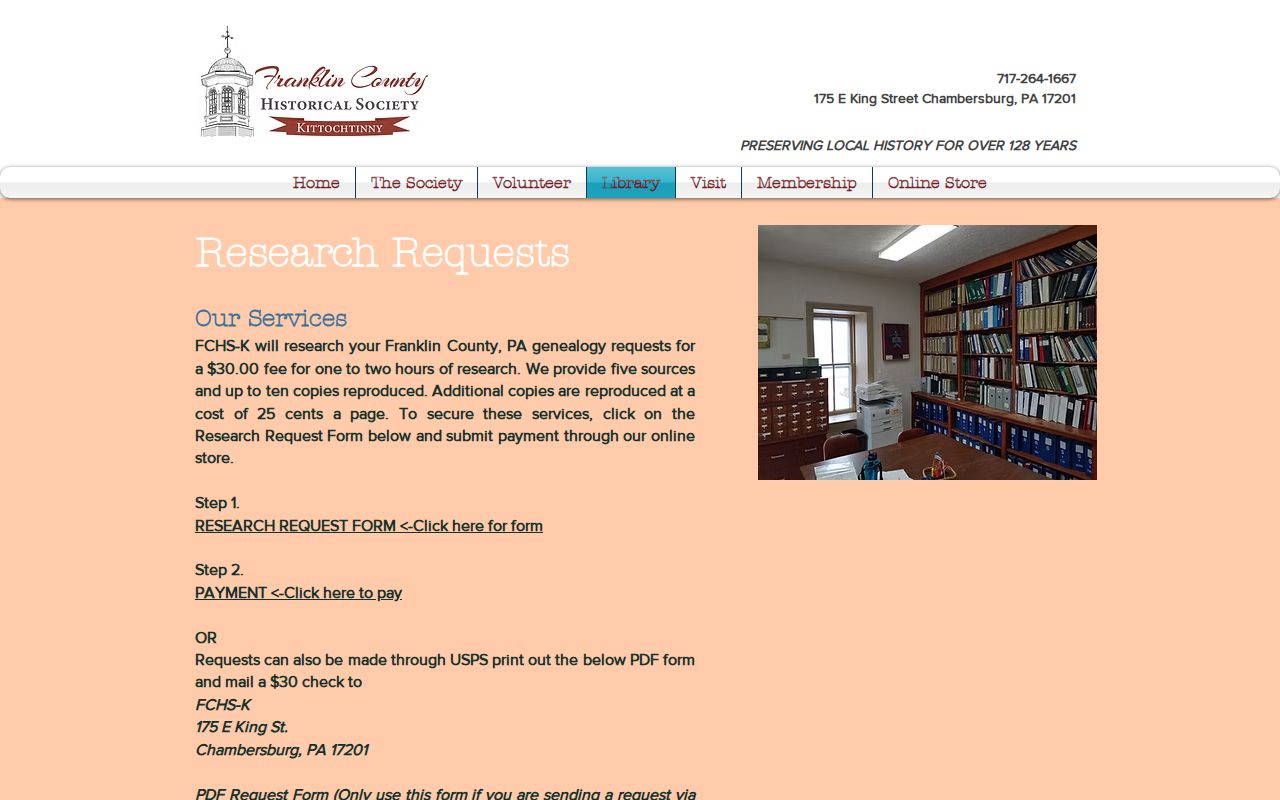
The service is a documented alternate access channel, while the original county custodian remains the source for official record copies.
Chambersburg Resident Lookup Privacy
Pennsylvania protection is record-specific. The Address Confidentiality Program offers qualifying survivors an alternate mailing address that may be used with voter registration and other government records. It does not erase every earlier public record and is not a substitute for an individual safety plan. Courts may redact protected identifiers, and public UJS results exclude sealed, expunged, juvenile, and limited-access matters. Vital records have eligibility limits, while voter information has statutory controls.
For a mistake, contact the relevant custodian. Tax Assessment handles assessment-data errors. Voter Registration handles registration issues. A court docket question belongs with the filing court. A recorded-document concern belongs with the Register & Recorder. A search result is not a correction channel.
Lawful use. Use Chambersburg records for personal, lawful research, family history, estate matters, or verification with the proper custodian. Do not use information to stalk, harass, intimidate, or harm anyone.
Chambersburg Lookup Request Routes
When the online path ends, switch to the custodian instead of filling the gap with an assumption. Franklin County Tax Assessment maintains counter computers and property cards. The Register & Recorder provides land-record access through LANDEX, its office, and other documented channels. County Archives accepts research contact for material outside a portal. Courts control their case files under judicial access policy, rather than the ordinary county public-records process.
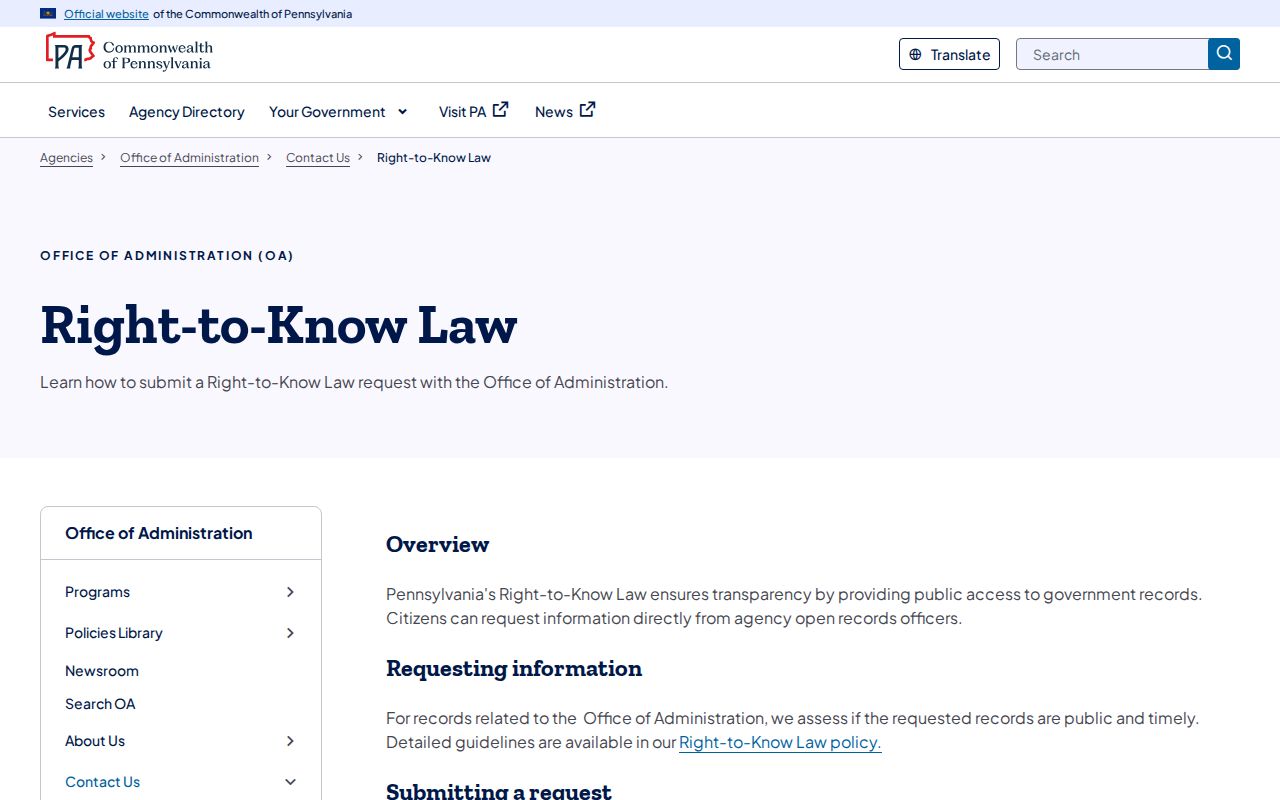
The Pennsylvania Right-to-Know Law, Act 3 of 2008, is the fallback for eligible borough and county executive-agency records. A Chambersburg Borough request can be made through the channels listed on the borough public-records page. Court case records are different: Franklin County explains that case-file requests follow the Unified Judicial System policy, and a single file should be requested from the court office that created it.
Pennsylvania Right-to-Know Law guidance explains the state response framework and related request information.
Use a focused request that names the office, record type, address or name where appropriate, and a limited date span. That gives the custodian a usable starting point without implying that every requested detail is public.
Note: The Chambersburg city directory route is better suited to a historical household trail than a current one-person verification.